Preventing Pollution with Permeable Pavers
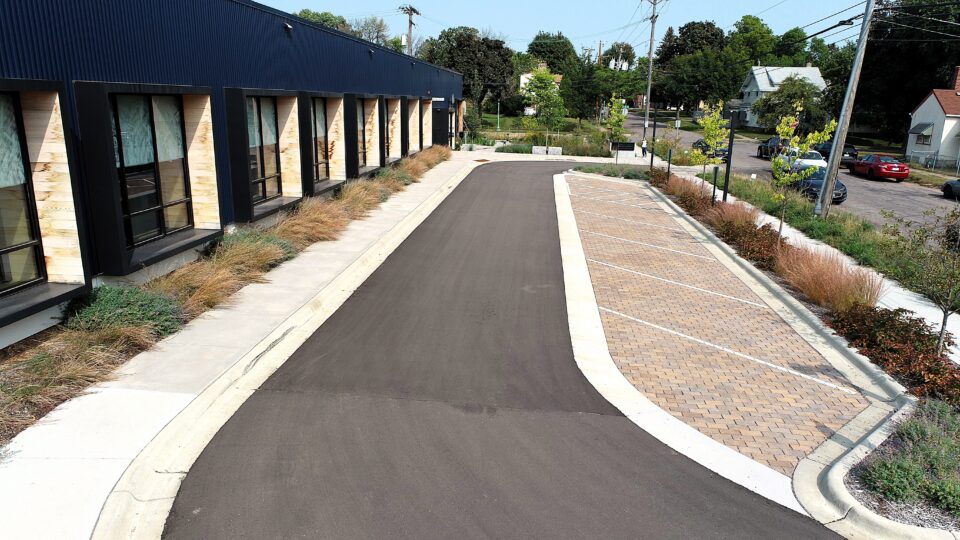
During a downpour, sheets of rain wash over the east parking lot at our Watershed Learning Center and the water rushes across the pavers toward the curb. Yet even with all the rain, water isn’t collecting along the curb. Where did it go?
The pavers in our parking lot are permeable —they let the water flow through the gaps and soak into the ground below. As a result, projects with permeable pavers like our parking lot prevent runoff from carrying pollution like trash, salt, and leaves to the Mississippi River via storm drains.
When it rains, or snow melts in a city, water flows over hard surfaces like roads, sidewalks, roofs and parking lots and into the storm sewer system. From there, the system quickly carries water to nearby lakes and the Mississippi River without treatment. Anything on the street, like trash, salt, or leaves, ends up in our waterways.
Capitol Region Watershed District (CRWD) helps build clean water projects to slow down and soak up water before it reaches storm drains. Permeable pavers are one of the many types of projects that are supported by our Clean Water Project grants.
Impermeable vs Permeable
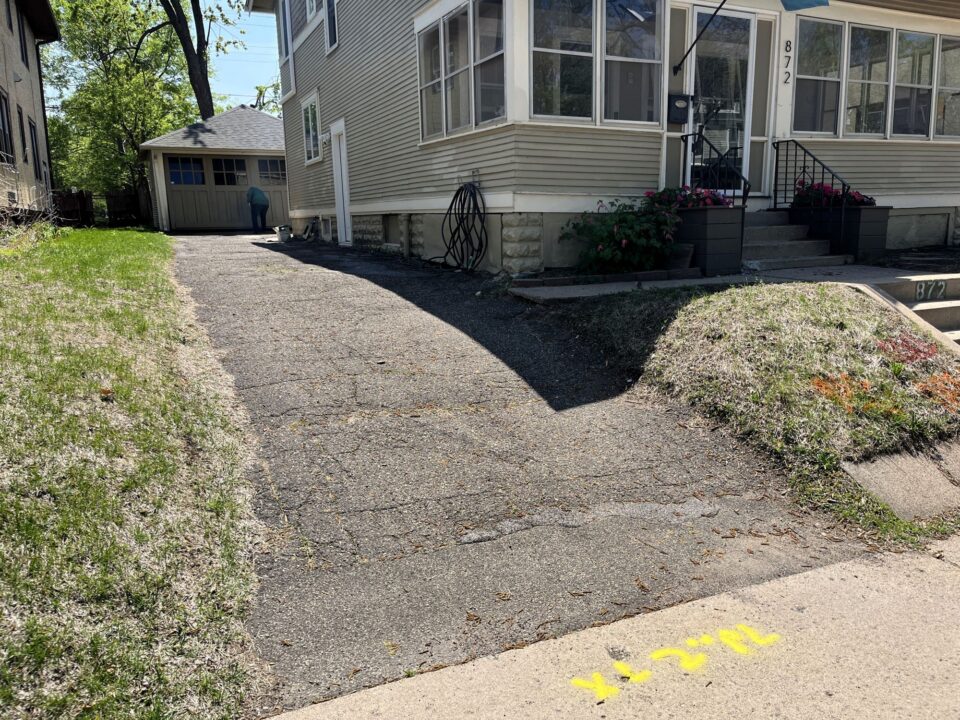
Typically, paved driveways and parking lots are made of asphalt or concrete and are “impermeable”; rainwater runs down the hard surface, carrying pollutants such as leaves, trash, automotive oil and gas, and salt, to a storm drain that flows directly to a nearby water body. Replacing a traditional driveway or other paved surface with a “permeable” option lets rainwater to soak into the ground instead of flowing into storm drains.
Permeable pavements are designed to let rainwater flow through gaps in the pavers or holes in the material’s surface and soak into the ground below. This helps prevent runoff from carrying pollution to storm drains and local lakes, wetlands and rivers. Permeable pavement can be pavers, porous concrete, or a mix of both, and the permeable areas can vary in scale.
A residential driveway is the most common permeable pavement project. But parking lots, patios, walkways, and sidewalks can also be permeable. Pavers are a popular option because of their aesthetic appeal and refined look.
Permeable Pavement Projects
Residential Driveways
Wheeler
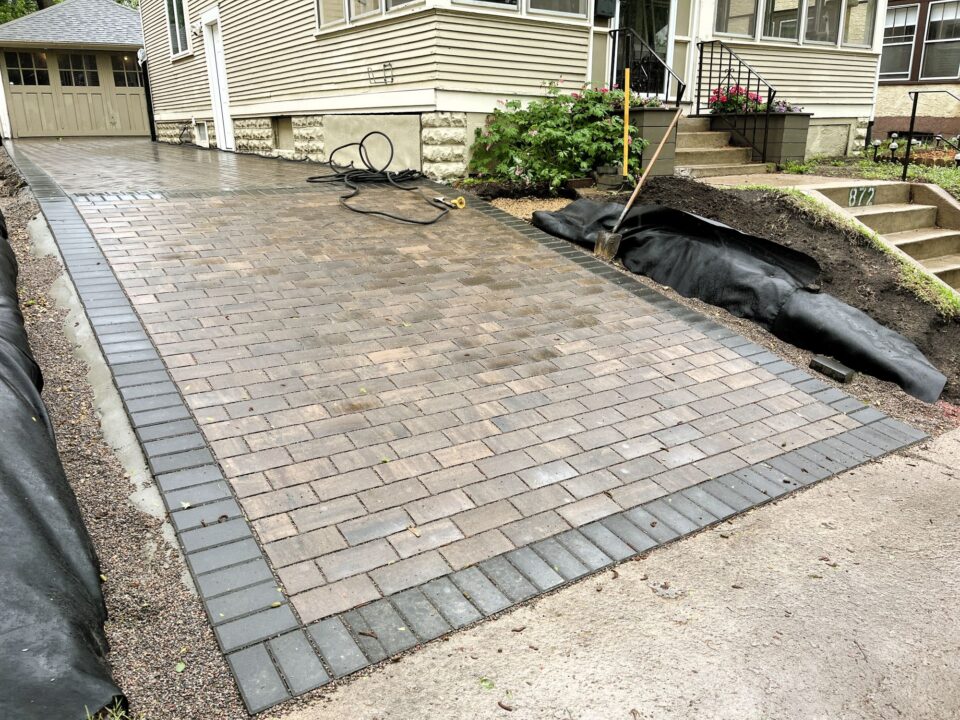
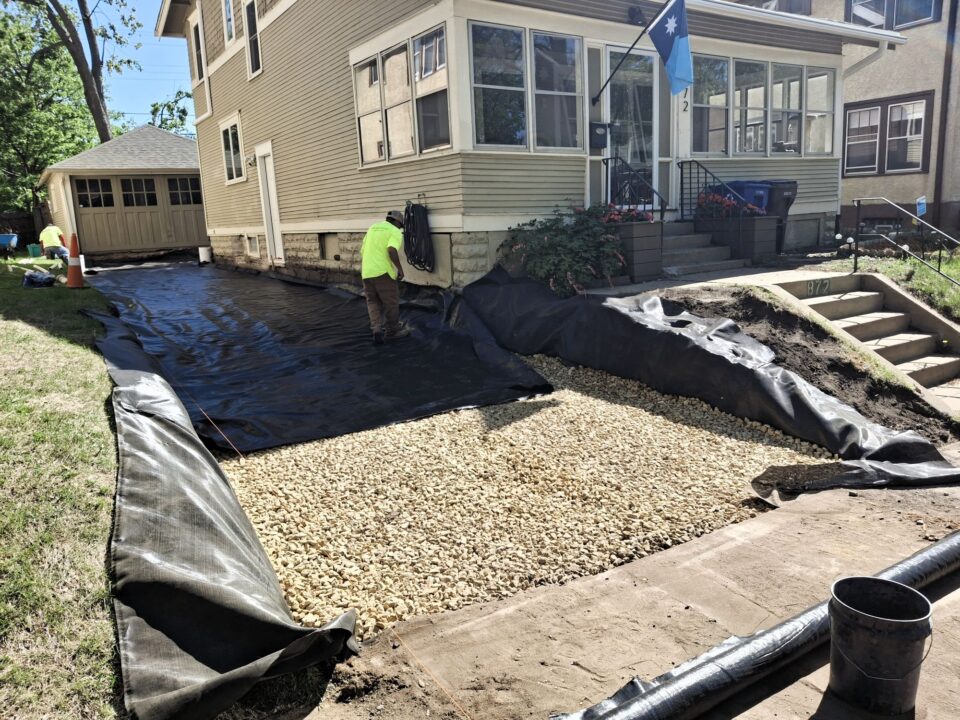
With support from a Clean Water Project Grant, Dan Wheeler added a permeable section to the end of his Saint Paul driveway that drains from his roof, garage and driveway. A channel drain pretreats runoff before it reaches the pavers, and the system uses crushed concrete as the aggregate material below.
Dan installed an inspection well at the end of the permeable system for annual infiltration testing. This allows for inspections to see if the system is full. To test it, CRWD staff emptied a 50-gallon water barrel upstream of the driveway to check that no water runoff left the driveway or showed up in the inspection well.
Foley – Dolen
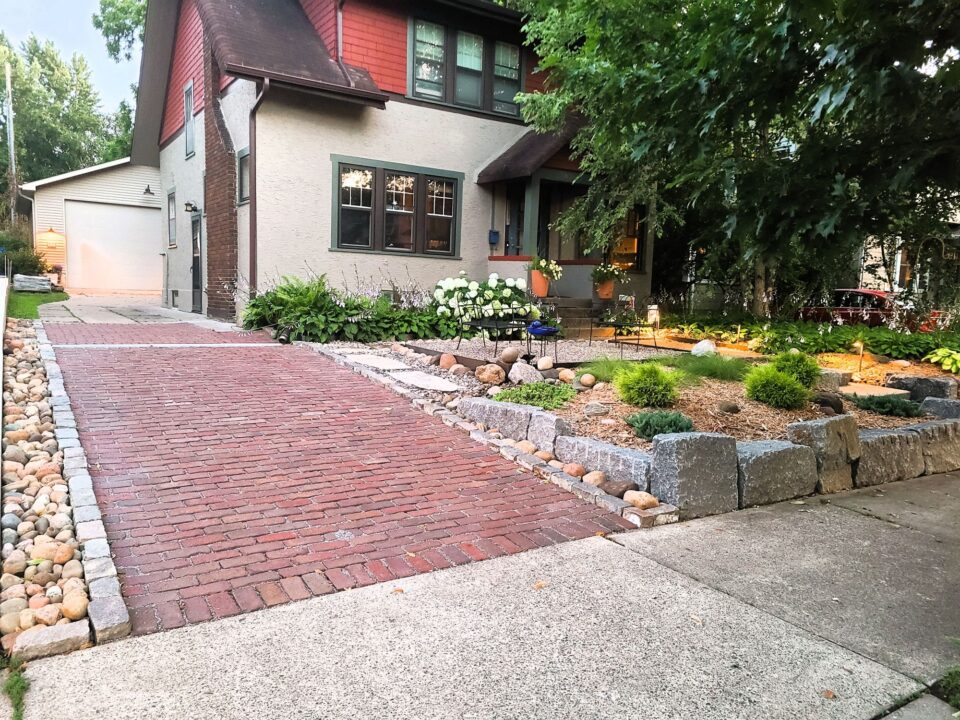
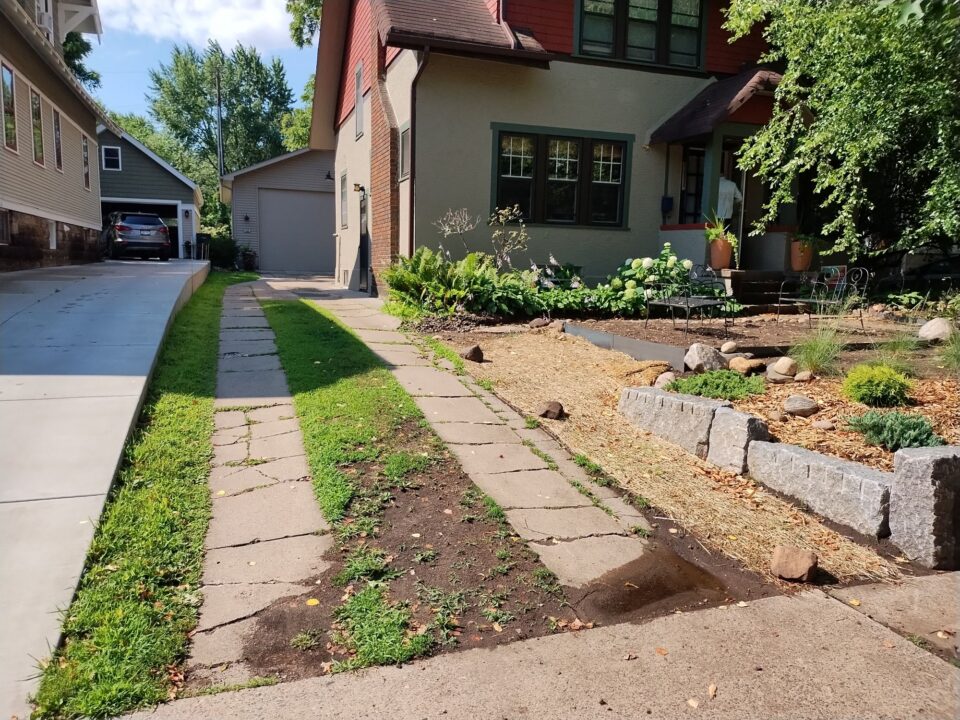
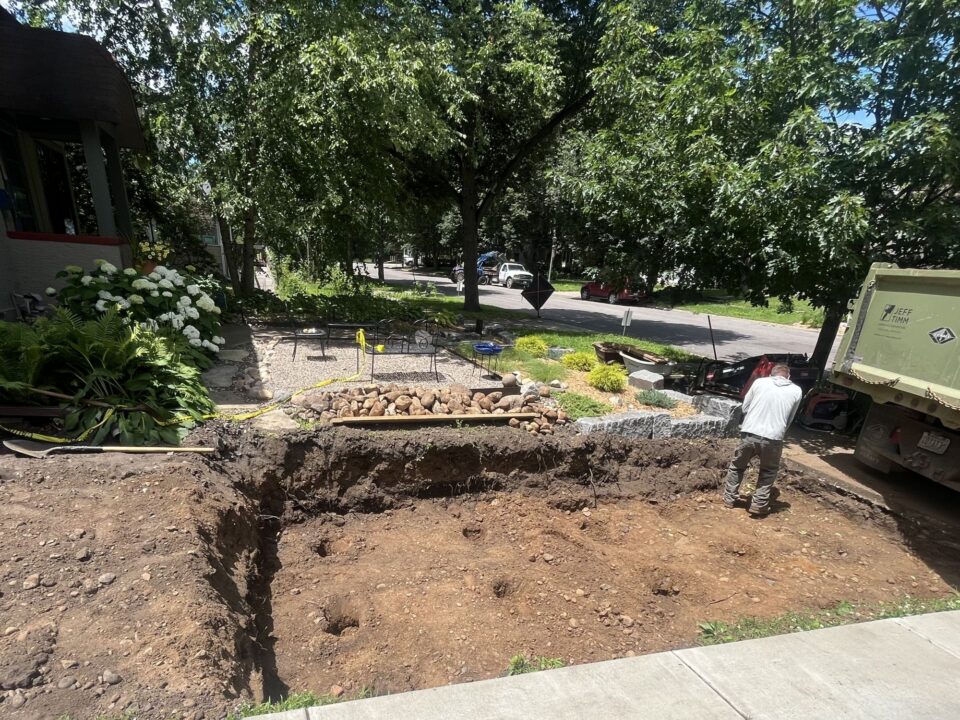
Mike Foley and Jen Dolen installed a rain garden in the front yard of their Saint Paul home with support from a Clean Water Project Grant, featured in our article Residents Build Rain Gardens to Protect the River. When it was time to redo their crumbling asphalt driveway, they contacted CRWD for another grant to install permeable pavers in a portion of the driveway. Although they used pavers for the entire driveway, only a small, sloped section is permeable. That section is sized to capture runoff from the driveway and a portion of their roof.
Homeowner Mike captured a video of the driveway during a rainstorm. In Mike’s YouTube video, Permeable paver driveway doing its job, you can see water hitting the permeable area and running down but soaking in before reaching the downstream sidewalk.
Both driveway projects help protect local water bodies by reducing runoff flowing to storm drains.
Parking Lots
Friends School
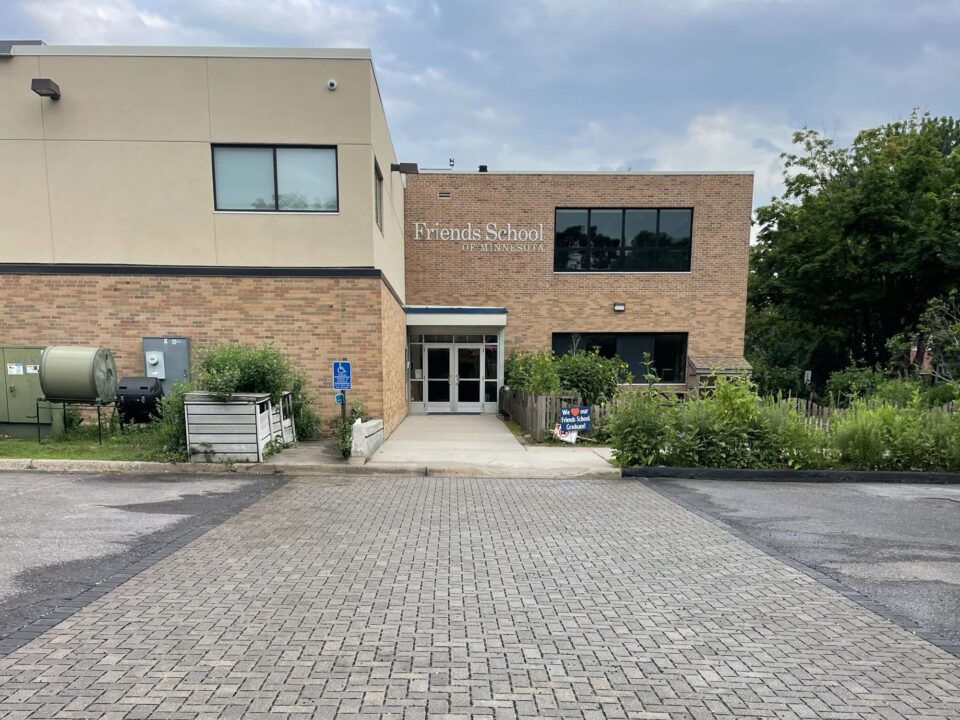
In 2008, CRWD provided grant funding for a permeable pavement section of the parking lot at the Friends School of Minnesota in Saint Paul. The permeable pavement captures runoff from the parking lot, sidewalk, and a portion of the building’s roof.
In 2022, CRWD provided additional Clean Water Project Grant funding to rehab the permeable pavement after the 14-year-old project passed its life expectancy and needed an update. Contractors removed the pavers, replaced the underlying joint material of aggregate rock, then reinstalled the pavers and replaced them as needed.
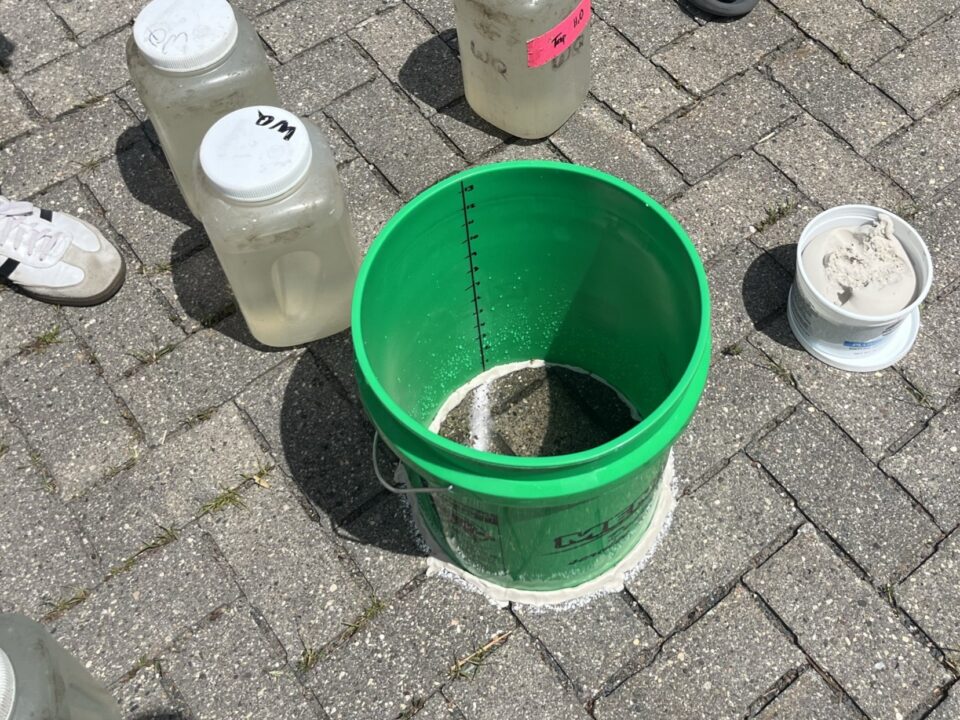
CRWD staff did infiltration testing before and after the rehab project to measure improvements. After the 2022 rehab, the project had five times the initial infiltration rate.
Hamline Church
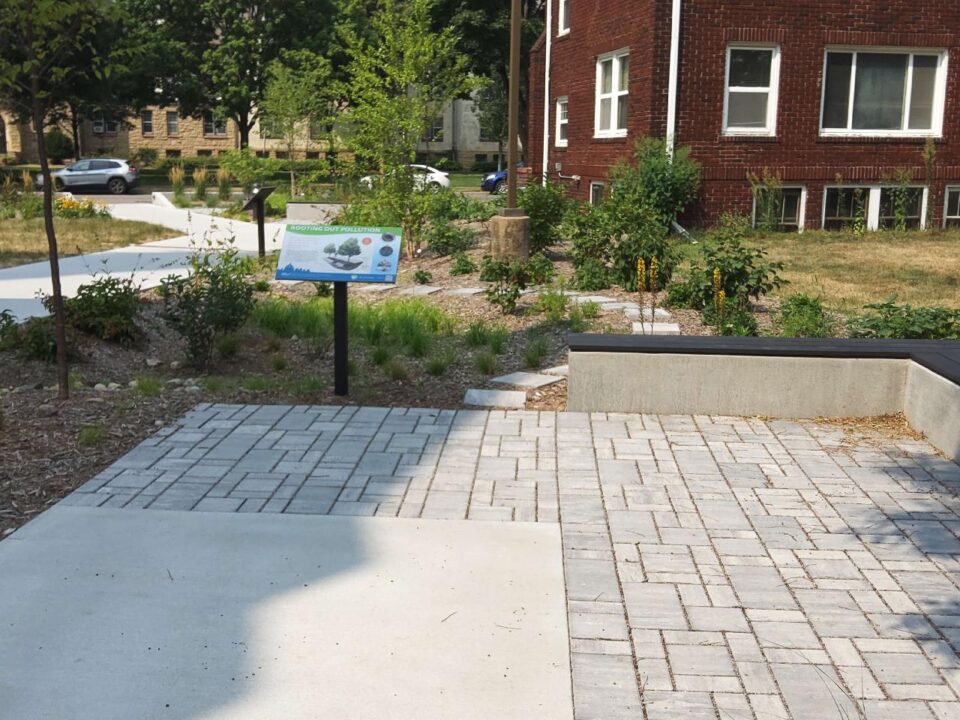
Hamline United Methodist Church in Saint Paul used a CRWD Clean Water Projects grant to transform a section of their parking lot into multiple clean water projects and beautiful green space for their community. The project removed 3,400 square feet of impervious area and added a permeable paver patio and walkways, along with tree trenches, three rain gardens totaling 960 square feet, and native landscaping. The rain gardens capture runoff from the remaining parking lot while providing habitat for pollinators.
Watershed Learning Center
We incorporated clean water features like permeable pavers, rain gardens, tree trenches, and a cistern at our Watershed Learning Center. As a result, not a drop of rain leaves our site!
Permeable pavers in our east parking lot’s five spaces collect water from the lot and surrounding sidewalks, helping us achieve our goal of collecting all stormwater runoff from our site.
Care and Maintenance
Like any project, permeable pavers and pavement require maintenance to maximize performance and the project’s useful lifespan. Sweeping or vacuuming at least once a year helps keep the spaces between the pavers clear. If the spaces become clogged, water can’t soak in as designed.
Homeowners and property managers should minimize their use of sand and de-icing salt on their permeable pavers in the winter. However, many people find that they are generally less icy in the winter than traditional pavements because water can soak into them.
Working Together for Clean Water
Impermeable surfaces are a part of our urban landscape but by building permeable pavement projects, we can help protect the water quality of our precious water resources by capturing runoff before it flows to storm drains. From residential-scale driveways to school parking lots to community green spaces, we can work together to build clean water projects that protect water quality and build climate resilience.
If you’re interested in a permeable pavers project, you can learn more and apply for a Clean Water Project Grant on our website.