Rain Garden Secrets Revealed: Reducing Pollution One Drop at a Time
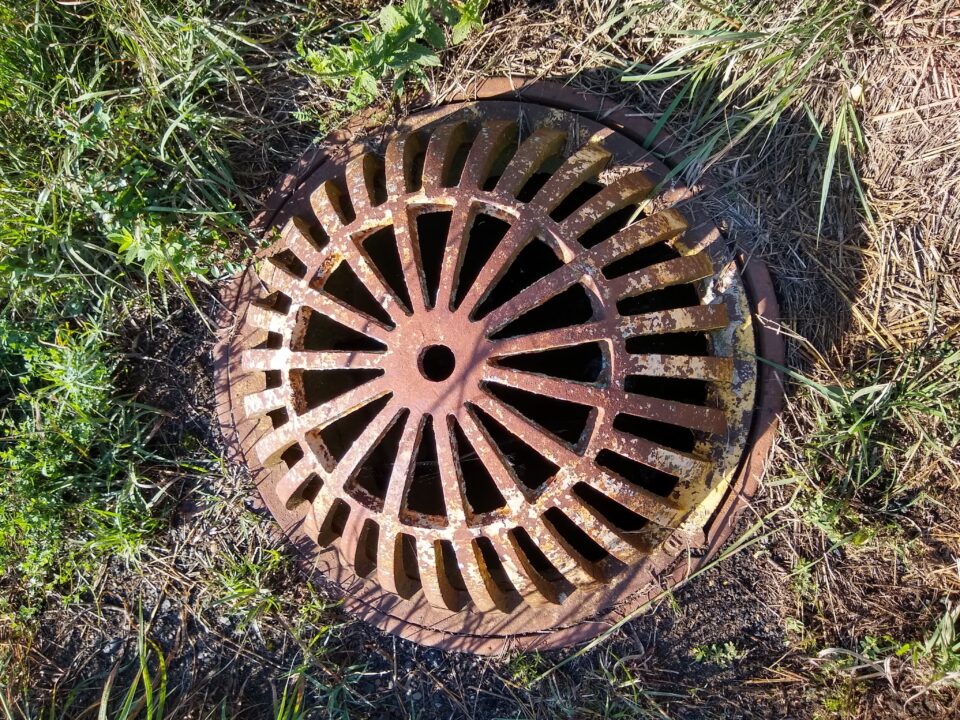
It’s pouring outside. A slow-moving September thunderstorm dumps soaking rain, accompanied by flashes of lightning and cracks of thunder. Raindrops fall on driveways, rooftops and roads that flow towards the nearest storm drain, creating racing rivers of stormwater along the curb line. The water carries any leaves, oil, trash, and pet waste on the surface into storm sewers that flow to lakes and the Mississippi River without treatment. This stormwater pollution degrades water quality and can also cause localized flooding, erosion, and damage to infrastructure.
In highly developed areas like Capitol Region Watershed District (CRWD), hard surfaces cover about 50% of the land, preventing water from soaking into the ground when it rains. Rain gardens help alleviate stormwater pollution by collecting some of that water before it flows into the storm sewers. Read on to discover more about the secrets of rain gardens.
What’s a rain garden
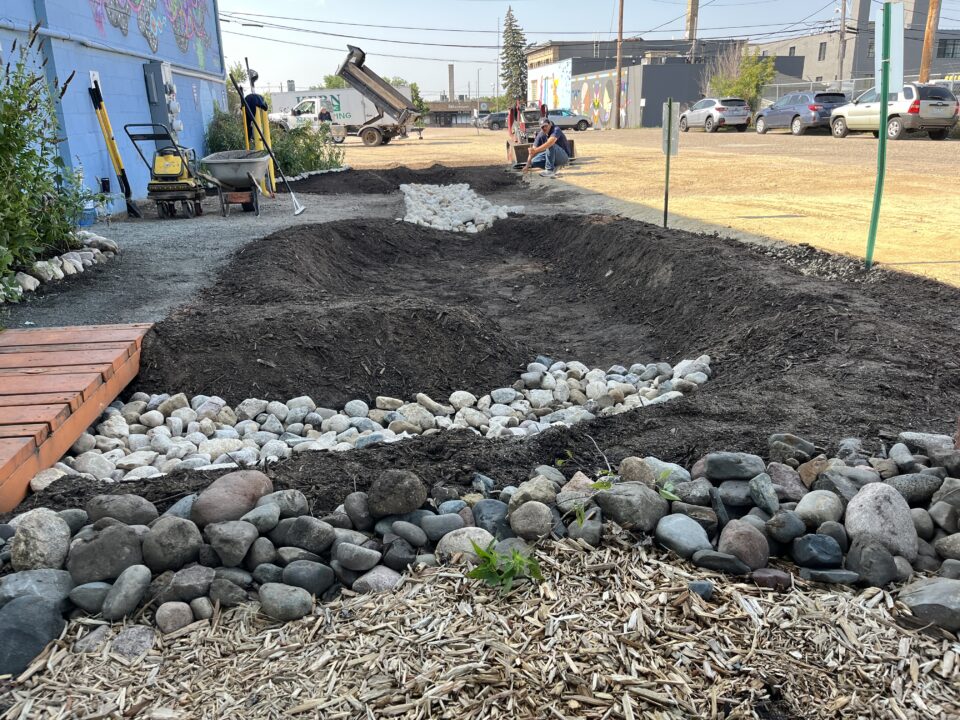
Rain gardens are bowl-shaped gardens designed to soak up and clean stormwater, helping to protect our lakes and the Mississippi River. Stormwater from nearby rooftops, driveways, streets and parking lots is directed to a garden where it soaks it into the ground. The native plant roots and soil microbes help filter out and break down pollutants in the water, and the long roots of native plants anchor the soil in place to prevent erosion.
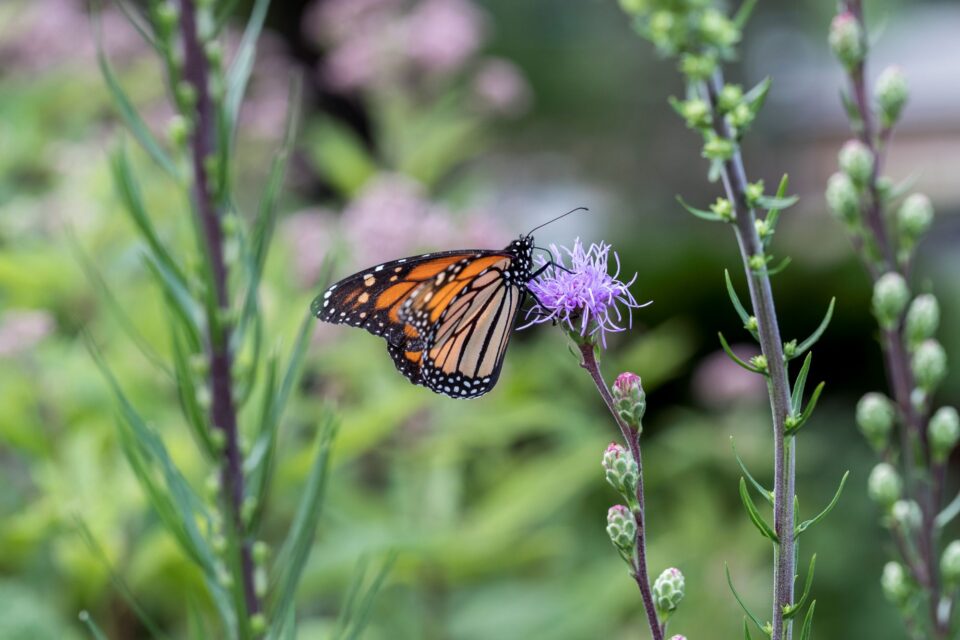
Native plants also provide food and shelter for pollinators such as bees, butterflies, birds, and other wildlife. Rain gardens are typically dry within 48 hours, so there isn’t enough time for mosquitoes to hatch.
Rain gardens vary in size and type – from a small, residential rain garden in a front yard, to a curb cut rain garden in a boulevard, to large rain gardens like the ones at Highland Bridge. But no matter the size, all rain gardens in CRWD help protect water quality in nearby lakes and the Mississippi River.
Features
While all rain gardens share the same basic make-up, different features for a garden’s design depend on the size, location, and drainage area of the project.
Inlets –Water Flows into the Garden
All rain gardens have an inlet where water flows into the garden. Standard inlet designs we use for rain gardens include:
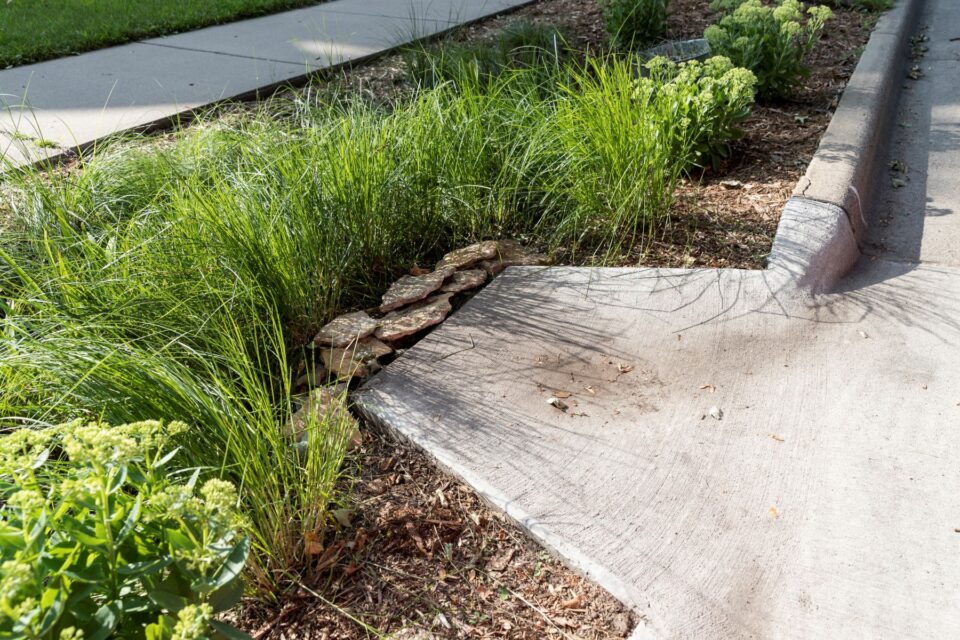
- Swales are often used in conjunction with a downspout connection for smaller-scale gardens, such as residential projects, that collect runoff from rooftops. A swale is a channel, usually about a foot wide by a few inches deep, that is filled with plants, rocks, or both. The swale helps slow down the rush of water from the downspout to reduce erosion.
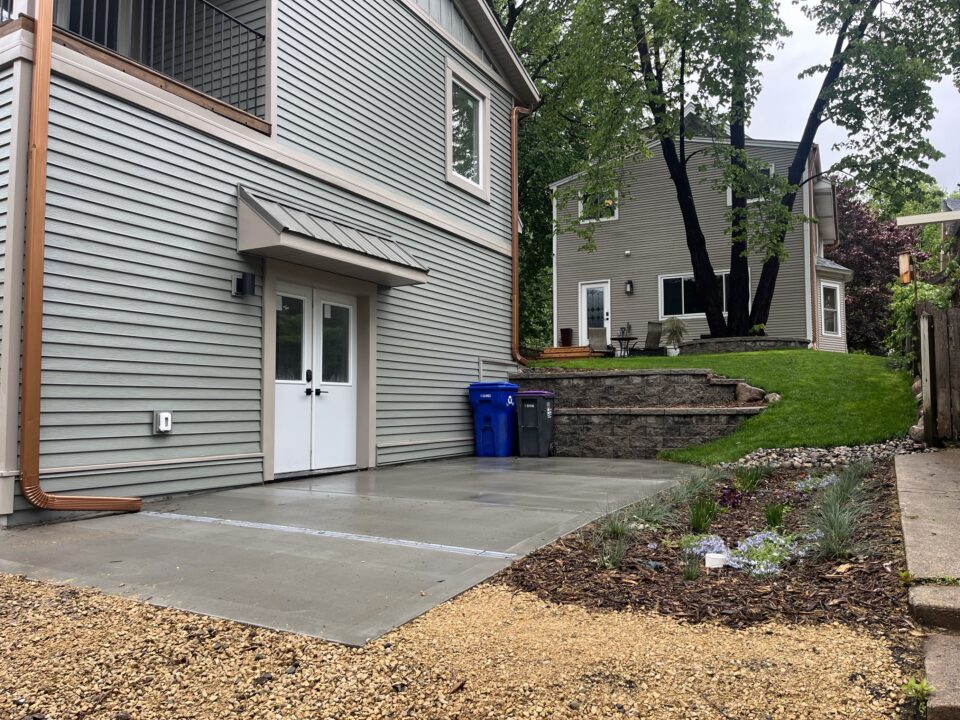
- Channel drains are frequently used for rain gardens along driveways or paths. The channel drain is installed in a surface, like a driveway, to capture water runoff and direct it to the adjacent rain garden. A channel drain can also help settle out or remove sediment from the water before it reaches the garden.
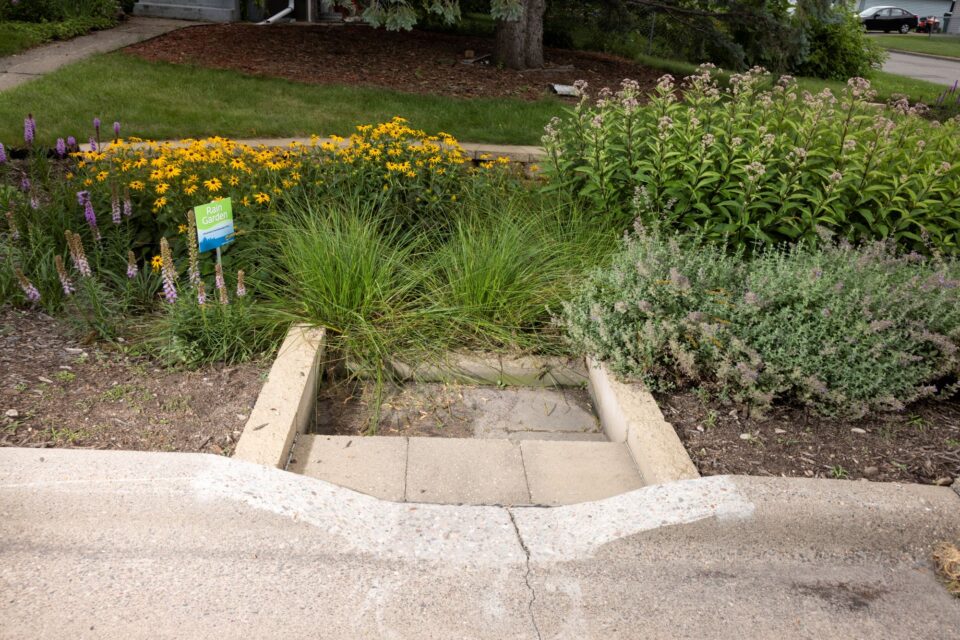
- Curb cut inlets with pretreatment are typically used in projects that collect stormwater with higher levels of pollution, such as curb cut rain gardens. Water flows through an opening in a curb into a pretreatment system before it enters the garden. The pretreatment system collects any trash, leaves, and sediment, making it easier to clean and maintain. Curb cut rain gardens often have a pretreatment system built out of landscaping blocks, but some use proprietary systems specifically designed for rain gardens.
Soils – Water Is Absorbed
Rain gardens need to have well-draining soil. We add a blend of sand and compost to optimize soil drainage. For most newly planted rain gardens, we use a 90% sand and 10% compost mixture. Compost can help the soil retain moisture and add nutrients that increase plant growth. The sand helps water filter through the soil quickly.
In some projects, we dig further down to add a base layer of rocks to improve drainage. The rock layer also increases the water storage capacity of the rain garden. The water enters the garden as usual and filters through the soil and then is stored in the rock layer under the garden as it slowly soaks into the ground. This all happens under the surface of the garden and is indistinguishable from other rain gardens – the surface water still drains within 48 hours.
Outlets – Water Flows Out
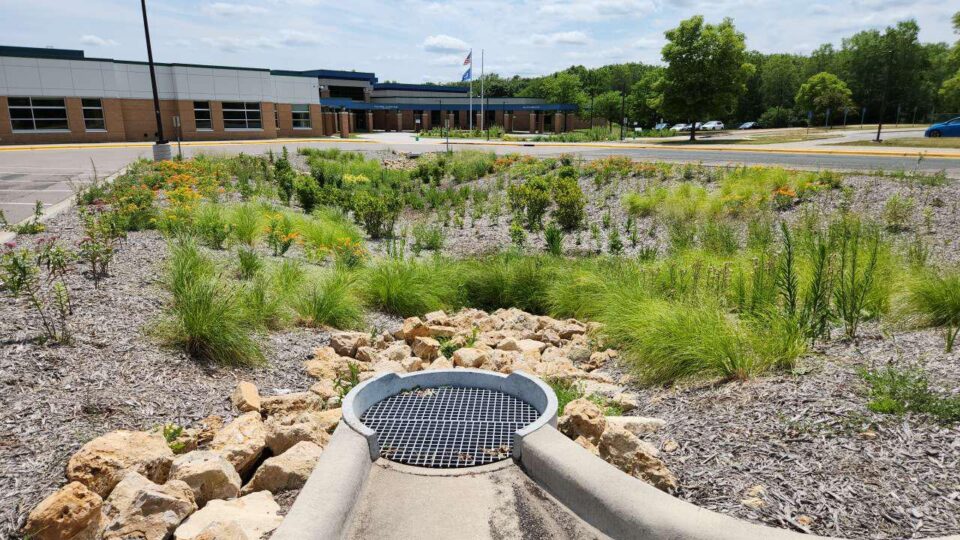
For most rain gardens, it takes a significant amount of water in a short amount of time to fill the garden. If a rain garden basin does fill up, any excess water is directed to the outlet while the water in the basin slowly soaks into the ground. A rock swale, like the swale inlet design, is a common outlet. Some larger rain gardens feature a vertical pipe with a domed beehive grate over the top.. If water reaches the top of the grate, the excess water will overflow into the pipe which is typically connected to the storm sewer.
However, not all rain gardens have an outlet. For example, in most curb cut boulevard rain gardens the water from the street will bypass the inlet if it’s filled with water.
Underdrains – Excess Water is Removed
Some rain garden designs include an underdrain, which is a pipe or drain below the garden that is connected to the storm sewer to ensure the garden does not hold water for more than 48 hours. We only include underdrains in project designs when the project site has poor soils that drain slowly. Approximately five percent of our residential boulevard rain gardens include underdrains. When an underdrain is installed in a rain garden, it starts off closed and is only opened if we observe the water draining too slowly.
Plants – Roots Soak Up Water
Rain gardens feature a variety of native plants that are selected based on light conditions, soil type, location in the garden, bloom times, and salt tolerance (for gardens that collect runoff from streets or parking lots). We often recommend flowering plants with staggered bloom times to provide food for pollinators throughout the growing season and to prolong the beauty from flowers. The plants include a mix of grasses, sedges and flowering plants.
- Rose Turtlehead
- Purple Coneflower
- Blue Flag Iris
- Cardinal Flower
- Sensitive Fern
- Black Eyed Susans
- Prairie Dropseed
- Aromatic Aster
Common rain garden plants that are relatively tolerant of salt pollution for use in curb cut or large-scale projects exposed to road salt in the winter.
- Butterfly weed
- Blue Grama
- Fox Sedge
- Purple Coneflower
- Prairie Blazing Star
- Bee Balm
- Little Bluestem
- Asters
Refinements
We continuously evaluate how our rain gardens function for performance and maintenance. Over the past two decades, we have refined our preferred soil types, inlet structures, and garden designs. For example, the newest style of our curb cut inlet pretreatment helps capture more sediment, slow more water, and ease maintenance. We’ve also reduced the number of plant species included in garden designs, so it is easier for property owners to identify planted species when weeding.
While newer rain gardens may have improved features, all rain gardens provide benefits to water quality in lakes and the Mississippi River and with proper maintenance, continue to provide those benefits for years to come.
Project Types
Rain gardens can be installed in a variety of property types and situations. The size of the gardens is based on the amount of water the garden is designed to capture.
Residential
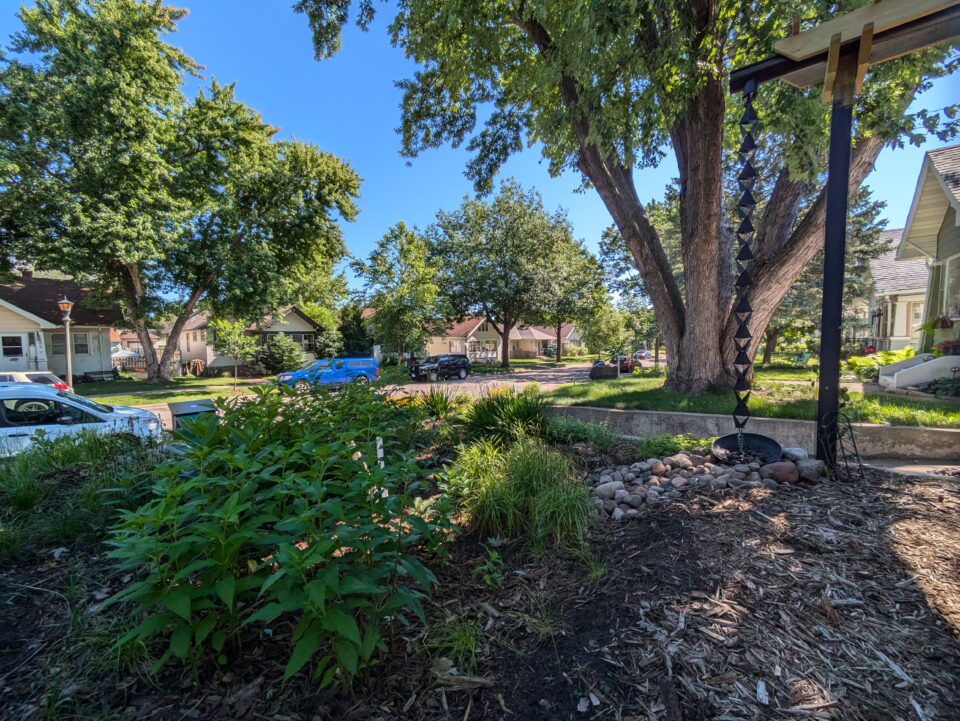
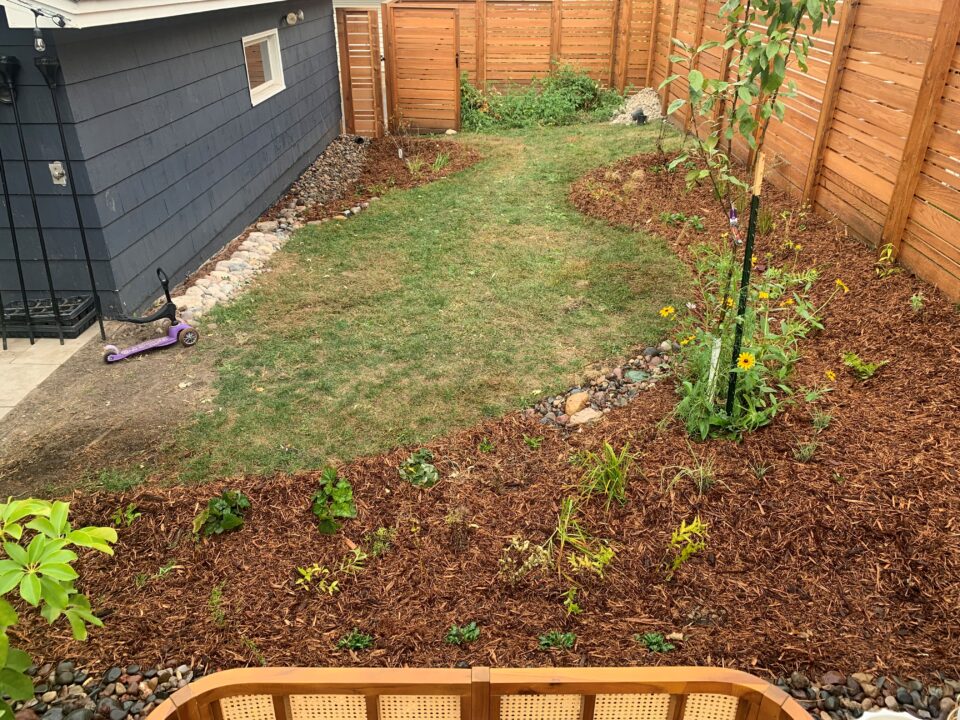
Residential rain gardens are common throughout CRWD. Our grant program has helped build over 160 residential rain gardens throughout CRWD. They are often in the front yard of a home and capture stormwater runoff from roofs of houses or garages, as well as driveways or patios. Residential projects are smaller-scale, as they are focused on capturing and cleaning water from a single residential property. They can be designed to fit the property owner’s aesthetic – some feature wild, prairie plants, while others feature manicured landscaping. The average residential rain garden in CRWD captures approximately 15,000 gallons of stormwater annually.
Read Residents Build Rain Gardens to Protect the River for more about two residential rain garden projects.
Curb Cut Boulevard
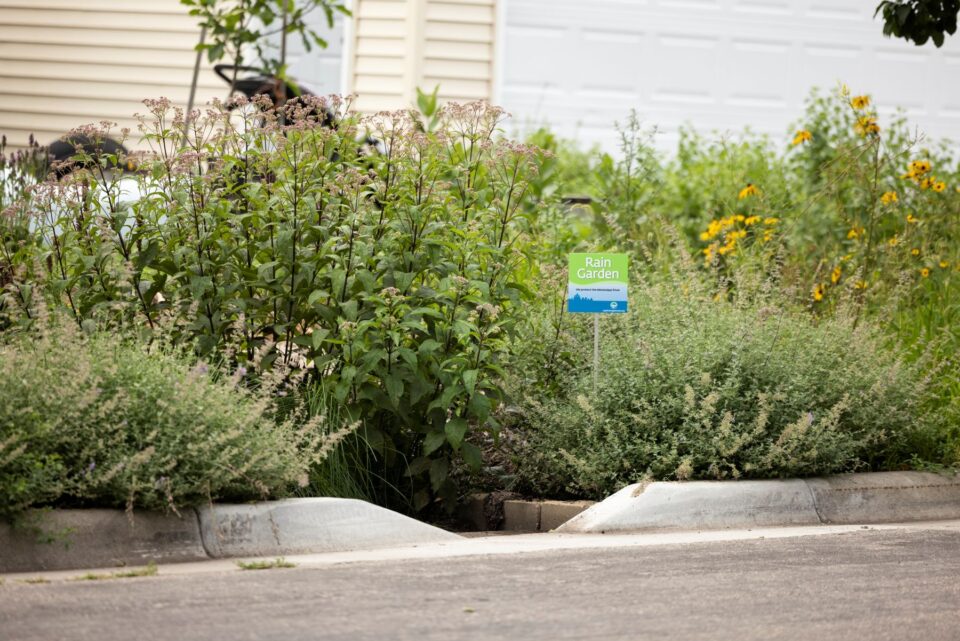
Rain gardens in a city or county right-of-way (the publicly owned strip of land that runs along a street) are another common practice in CRWD. Since 2014, we’ve installed over 350 curb cut rain gardens across the District. The rain gardens are usually along residential streets between the curb line and sidewalk, or along the curb line when there isn’t a sidewalk. These gardens capture polluted stormwater runoff with trash, leaves, grass clippings, and automotive oil and gas.
When the water flowing along the curb reaches the break in the curb, it flows into the garden inlet and spills into the rain garden, which is filled with native plants. The water collects at the bottom of the garden, and the long roots of the plants quickly absorb it. Curb cut rain gardens soak up street runoff and help reduce local flooding, which helps improve the water quality of lakes and the Mississippi River. The average curb cut rain garden in CRWD captures over 50,000 gallons of water a year.
Check out Curbing Pollution for Clean Water for a step-by-step guide to curb cut rain gardens in CRWD.
Large Scale
Sites such as schools, churches, non-profits, businesses, and publicly owned properties can install larger-scale rain gardens. These gardens are larger in scale because they often capture larger volumes of runoff from buildings, sidewalks and parking lots. Rain gardens that capture stormwater from parking lots help keep pollution out of lakes and the Mississippi River. Like curb cut rain gardens, they collect polluted stormwater with trash, leaves, grass clippings, and automotive oil and gas.
Projects at larger sites often have more opportunities to incorporate additional best management practices (BMPs) for stormwater management. Besides rain gardens, many sites have other stormwater BMPs like tree trenches, permeable pavers, and infiltration systems.
- Midway Peace Park has two large rain gardens and a water feature.
- Arlington Pascal features a series of several curb cut rain gardens that hide underground stormwater storage and infiltration systems.
- Central High School treats stormwater runoff with two rain gardens, two tree trenches surrounded by permeable pavers, and an underground filtration system.
- CRWD’s Watershed Learning Center includes three rain gardens, tree trenches, permeable pavers, a cistern, an underground infiltration system, and a pocket park.
Rain gardens in public spaces also provide educational benefits since visitors coming to the site can see the gardens and any accompanying educational signs. The average large-scale rain garden in CRWD captures 100,000 gallons of water a year.
Benefits
As mentioned in the sections above, rain gardens offer numerous benefits, regardless of their scale. They protect water quality, reduce flooding, provide habitat for wildlife and pollinators, reduce urban heat island effects, add beauty to our communities, and continue to be a good investment of our resources.
The combined benefits of the rain garden in CRWD really add up! Since 2004, CRWD has helped install over 600 rain gardens through our grant programs. The average rain garden in CRWD can capture and clean over 50,000 gallons of stormwater runoff each year. By diverting stormwater before it reaches storm drains, rain gardens help improve water quality in lakes and the Mississippi River by reducing pollution from phosphorus and solids.
Considering a Rain Garden?
Now that you know all about rain gardens, you may notice opportunities to add them to your property. We can help if you’re in Capitol Region Watershed District!
CRWD provides technical and financial assistance to residents, non-profits, schools, businesses, and public agencies in our District to build projects like rain gardens that prevent stormwater pollution from entering nearby lakes and the Mississippi River. Learn more about them on our Clean Water Projects Grant page.
More actions to protect clean water
There are many ways to care for our lakes and rivers in addition to installing a rain garden. Our collective actions contribute to improved water quality. Here are some things you can do to protect water right now.
- Clean your curb: Keep leaves and grass out of streets and gutters to stop them from being carried to nearby lakes and rivers via storm drains. Organic debris in stormwater contributes to harmful algae blooms.
- Adopt a storm drain: Visit adopt-a-drain.org/ to find a storm drain near you and volunteer to clear it of trash and debris twice a month. Join nearly 13,000 people across Minnesota who’ve removed over 700,000 pounds of debris from over 22,000 storm drains!
- Scoop the poop: Put pet waste in the trash. Rain and snowmelt can carry harmful bacteria and nutrients from waste to lakes and rivers.
- Pick up trash: Collect litter in your yard, street, and gutter before rain carries it to a storm drain, which flows to our lakes and the Mississippi River.
- Salt smarter: Remove snow and ice from driveways and sidewalks before applying salt. Consider using grit or sand for traction. Sweep up grit and sand or leftover salt to reuse as needed.